This is part of WeGoAI's daily series on the things that actually shape our world. Figures from Reuters, Yahoo Finance, CNBC, TrendForce, Bernstein, KeyBanc, Goldman Sachs, Kyobo Securities, Micron, SK Hynix, Samsung and the Korea Exchange as of 16 October 2026. Not investment advice.
“This is part of WeGoAI's daily series on the things that actually shape our world.”
Two Prices, One Industry
There are two prices for memory, and this week they told opposite stories.
The first is the contract price — what a cloud provider actually pays for a wafer's worth of DRAM, or a rack's worth of HBM. It rose roughly 20% quarter-on-quarter in the third quarter, and every major forecaster expects it to rise again in the fourth: TrendForce has conventional DRAM contract prices up 10-15% and NAND up 15-20%, while KeyBanc's Asia field work points to DRAM up 15-20% and NAND around 20%. In the first quarter of 2027, KeyBanc expects HBM contract prices to jump 80-100% quarter-on-quarter. Micron's chief operating officer said on 15 October that the company's 2027 HBM capacity is sold out.
The second is the equity price. It fell apart.
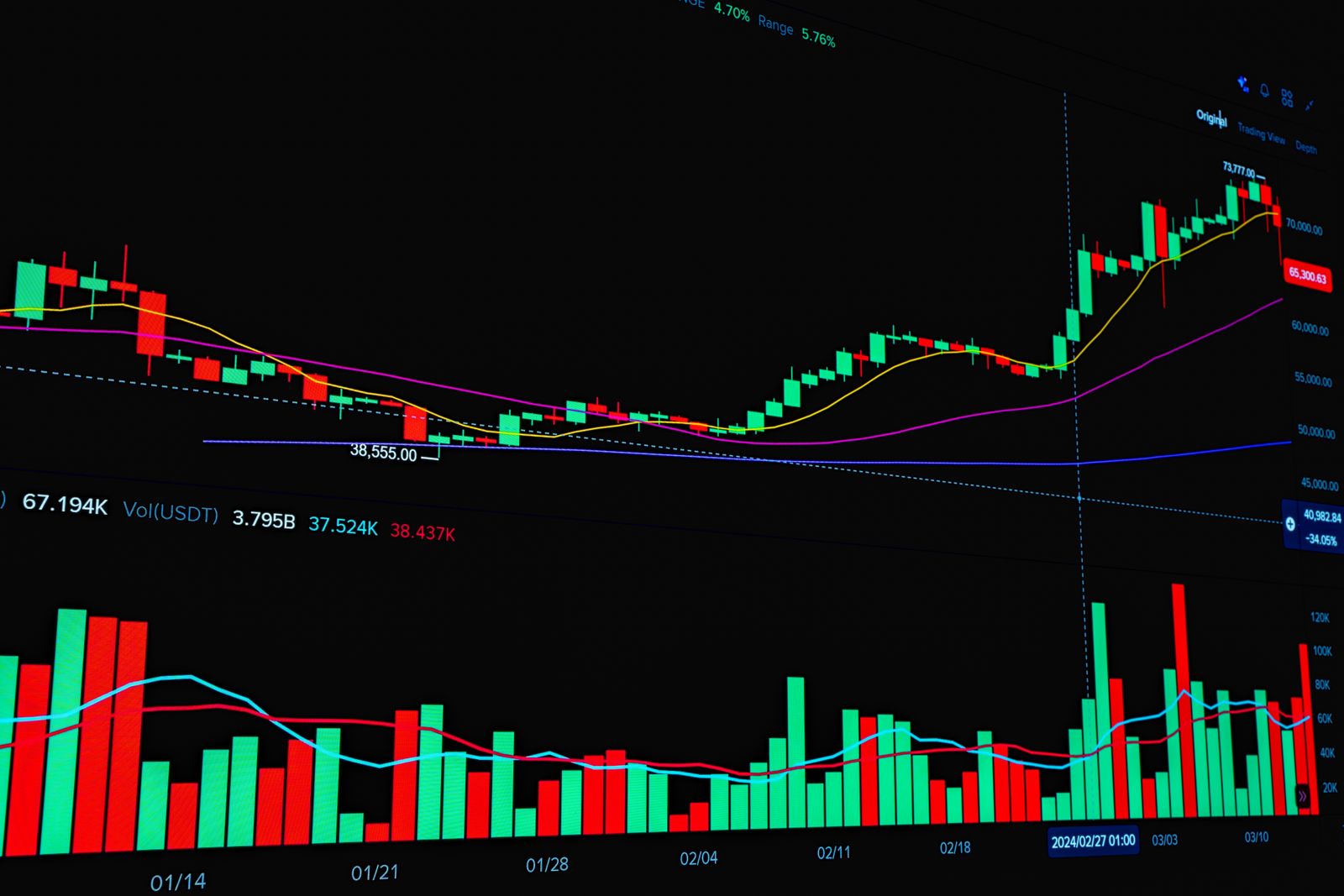
The Roundhill Memory ETF — ticker DRAM, the cleanest listed proxy for the sector — entered its second bear market of 2026 this week, down more than 20% from its September rebound high and nearly 40% below its June record close. Samsung Electronics, Micron, SK Hynix and SanDisk have together shed more than $700 billion in market value since 6 October. A broader Yahoo Finance basket of 61 semiconductor and storage stocks has lost close to $2.5 trillion. The iShares Semiconductor ETF posted its eighth consecutive decline — its longest losing streak since October 2008.
None of that is a contradiction yet. It is a disagreement about time: the contracts are pricing the next four quarters of physical scarcity, and the stocks are pricing the risk of a supply wave in 2028. This post is about which one is currently being set by reality, and which one is being set by fear.
What the Sell-off Is Actually About
Three separate fears got bundled together this week, and only the first is specific to memory.
One: a Chinese supply wave, priced three years early. ChangXin Memory Technologies (CXMT) has announced progress on a denser 4F² DRAM design, and the market read it as the end of the shortage. Goldman Sachs forecasts CXMT's monthly DRAM wafer capacity rising from 290,000 wafers per month at the end of 2026 to 513,000 by the end of 2028 — a 77% increase. But the same Goldman note argues the market has overestimated the technological impact of 4F², because HBM competition depends on packaging and advanced base-die manufacturing as much as on DRAM cell design, and export controls still keep EUV out of Chinese foundries. Even in 2028, Goldman estimates CXMT meets only about 50% of China's domestic DRAM demand and 40% of its HBM demand. The capacity is real; the timing is being pulled forward by roughly two years in the tape. CXMT's own shares fell over 5% on Thursday and are down around 20% since the end of September — the alleged winner sold off too.
Two: the cost of capital. Wednesday's hot US inflation print crystallised the risk that has been building in AI credit all month. Benchmark 10-year Treasury yields posted their sharpest quarterly rise this century, CoreWeave's bonds traded below 80 cents on the dollar and its five-year CDS blew past 1,100bps, about $18 billion of loans tied to Oracle's Project Jupiter entered stressed territory, and listings from AirTrunk, Firmus and SB Energy were pulled or paused. Memory sits inside that trade, because memory is where a large and growing share of AI capex is spent.
Three: demand doubts. OpenAI delayed its IPO to next year. Anthropic's third-quarter revenue growth of 45% quarter-on-quarter, to a reported $16.8 billion, was read as disappointing against the sector's expectations. If the demand curve flattens, no amount of contract-price discipline saves a stock priced for hypergrowth.
Meanwhile, in the Physical Market
Here is what the actual buyers and sellers of memory are signing.
And the buyers are behaving exactly as you would expect if the shortage were real. HP and Dell have extended memory supply agreements through 2031; Google is reportedly in talks on agreements covering through 2035. Micron's count of strategic customer agreements went from 16 in the second quarter to 26 in the third, and SanDisk has signed long-term agreements with eight customers including several major tech names. AMD's Lisa Su flew to Seoul this month to discuss three-to-five-year-plus memory partnerships with Samsung and SK Hynix as HBM4 shipments for the MI455 get underway. When an industry signs five-year contracts and one buyer stretches to 2035, spot nervousness about a 2028 fabs plan is not the dominant signal.
The Earnings Have Already Confirmed It
If you want a single number that settles the argument about whether the physical market is strong, Samsung gave it this month.
Samsung's preliminary third-quarter guidance points to operating profit of KRW 107.4 trillion, up 782.5% year on year — the first time the company has crossed KRW 100 trillion in a quarter — on sales of KRW 195 trillion, up 126.6%. Conventional DRAM prices keep climbing, supply stays tight, and HBM4 is now a meaningful contributor riding demand for Nvidia's Vera Rubin. The full release on 29 October will break that down by division, and the interesting part will be the other side of the ledger: soaring memory costs are squeezing Samsung's own smartphone and appliance business, with DX-unit losses expected to widen.
That is the memory tax in one company. Samsung is simultaneously billing its customers and paying itself.
Micron's week had the same two faces: it opened AATT2, its second advanced HBM assembly and test plant, in Taichung, with 2027 capacity sold out — and it is carrying a union strike vote from 7 October alongside a $35.16 billion buyback approved on 8 October. SK Hynix, which is up 96% year to date despite the drawdown, used SEDEX to unveil HBM4E at 16Gb/s per pin with more than 20% lower power than HBM4, and laid out a post-HBM roadmap of 3D-stacked DRAM, High Bandwidth Flash and CXL memory pooling, plus a second-generation 256GB CXL 3.2 module with roughly double the bandwidth and about 30% better energy efficiency. Its third-quarter results land 28 October.
The Shift That Makes This Structural, Not Cyclical
The reason contract prices and equity prices can disagree for a while is that the mix of memory is changing, and the bears are extrapolating total capacity while the bulls are extrapolating server mix.
- HBM's share of DRAM wafer capacity rises from 27% in 2025 to about 40% in 2027 (Kyobo Securities).
- HBM and RDIMM combined will account for 51% of DRAM bit supply in 2026, per TrendForce.
- KeyBanc's survey work suggests suppliers shifting capacity to data centres will cut memory supply available to PCs and smartphones by 20-30% in 2027.
- TrendForce still expects server DRAM and HBM bit supply to grow 27% in 2027, helped by node migrations and new fabs ramping in the second half — meaning the extra bits arrive late and are largely pre-allocated.
- Nvidia's next-generation Vera Rubin Ultra will be built mainly around HBM4E 8-high 256GB stacks, against HBM4 12-high 288GB in the current Vera Rubin generation.
This is the mechanism behind the whole vibes gap. Bit growth will come; it will be structurally aimed at AI servers, it lands mostly in the second half of 2027, and it is being booked out years ahead. A memory stock that fell 18% in a week has not been repriced by a single extra wafer — it has been repriced by a rising discount rate applied to a demand curve investors are no longer sure about.
Where the Two Prices Actually Meet
The convergence point is capex composition, and the numbers are startling.
TrendForce now expects global cloud service provider capex to rise 98% year on year in 2026 and another 50% in 2027, exceeding US$1.5 trillion in 2027. Within that, DRAM and NAND combined go from 47% of CSP capex in 2026 to 68% in 2027. Memory is no longer a component line item in the AI buildout; it is the majority of it. AI server revenue is forecast to grow over 90% year on year in 2027 on higher shipments and higher prices.
That is the bull case in one paragraph: the spend is contracted, the share going to memory is rising, and the prices are set by scarcity rather than sentiment. It is also the bear case in one paragraph, because a sector taking 68 cents of every capex dollar while its customers' free cash flow sits at roughly -15% of reported profit is a sector whose pricing power will eventually be tested — by customers redesigning systems to use less memory, by price ceilings written into long-term agreements from the second quarter of 2026 onward, and by any genuine demand slowdown that turns a shortage into a glut two years later.
What Would Prove Either Side Right
Four checkpoints, all inside the next six months:
- 28-29 October earnings. SK Hynix on 28 October, Samsung's full divisional release on 29 October, and Microsoft, Alphabet, Amazon and Meta the same week — the first hard read on whether 2027 capex guidance is still rising and whether hyperscaler operating profit is outgrowing depreciation.
- The DRAM ETF's late-July low, around $45. The fund closed 15 October near $49.5, about 9% above that level. Holding it preserves the summer range; a sustained break erases the entire rebound.
- Whether Q1 2027 HBM contract prices actually land up 80-100%. That is the single cleanest test of whether scarcity is pricing or narrative.
- CXMT's ramp versus its demand coverage. If capacity reaches 513,000 wafers per month in 2028 but still serves only half of China's DRAM demand, the 2028 supply-wave thesis needs rewriting.
The WeGoAI Takeaway
Two prices, two time horizons, one industry. Contract prices are being set by a physical market where 2027 output is sold, lead times run 20 weeks against an 8-week norm, and the largest customer relationships are being extended to 2031 and beyond. Equity prices are being set by investors who just discovered that the AI trade has a financing cost, and who have decided that a 2028 capacity headline is reason enough to sell the companies currently printing record profits.
Both sides are making a bet about when supply arrives. The difference is that one of them is signing contracts, and the other one is watching a chart.
Sources: Reuters, Yahoo Finance, CNBC, TrendForce (14 October CSP capex release; 12 October Weekly Radar; August memory release), Bernstein (7 October), KeyBanc Capital Markets field survey via TradingKey (16 October), Goldman Sachs via TradingKey, Kyobo Securities, Samsung preliminary 3Q26 guidance, Micron, SK Hynix, Korea Exchange. All figures as of 16 October 2026. Not investment advice.